
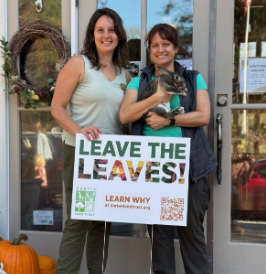
Why a Messy Yard Is a Gift to Nature
by Molly Robertson, Program Director
Every fall, we spend countless hours raking, blowing, bagging, and hauling away fallen leaves. But what if one of the best things we could do for nature is simply leave them where they fall?
Fallen leaves are not waste. They are essential habitat for wildlife.
Beneath that blanket of leaves, countless creatures find food, shelter, and protection from winter's harsh conditions. Moths, butterflies, beetles, and other beneficial insects spend the winter tucked among the leaves, while salamanders, frogs, toads, and other small animals depend on leaf litter for shelter.
Yet every year, Americans collect and discard millions of tons of leaves and other yard debris, sending valuable organic material to landfills, where its decomposition contributes to greenhouse gas emissions.
When we bag our leaves, we may also throw away the next generation of pollinators and other important insects. Many insects overwinter as eggs, caterpillars, pupae, or adults in fallen leaves. These are the very insects that pollinate our plants, feed baby birds, and sustain frogs, turtles, and countless other creatures. With insect populations declining worldwide, protecting even the smallest backyard habitats can make a meaningful difference.
Leaves are also nature's perfect mulch. As they decompose, they return valuable nutrients to the soil, retain moisture, suppress weeds, and support the organisms that keep our soil healthy. There's something ironic about spending time and energy removing this gift from nature, only to spend money on mulch and fertilizers to replace what we've thrown away!
What Can You Do?
- Leave the leaves! Designate an area of your yard where leaves can accumulate naturally. Under trees, around shrubs, and in garden beds are perfect places to create wildlife habitat while keeping your yard looking tidy.
- Use leaves as mulch. Spread fallen leaves around trees, shrubs, and perennial beds. They'll protect the soil through winter and gradually return nutrients as they decompose helping your plants thrive the following spring.
- Mulch leaves on your lawn. If you have a thick layer of leaves covering your grass, mow some into smaller pieces to help them break down and nourish the soil. Just remember to leave some leaves whole in garden beds and natural areas to protect overwintering insects.
This fall, give yourself permission to do a little less yard work. A few messy corners and a blanket of fallen leaves can make a world of difference for the wildlife that shares our neighborhoods.